
Starting a business is exciting, but choosing the right legal structure is one of the most important decisions you will make. Among the many options available, the Limited Liability Company, commonly known as an LLC, has become one of the most popular choices for entrepreneurs, freelancers, and small business owners.
When you’re first dreaming up a business, you’re usually focused on the fun stuff—like your logo, your first sale, or your website. But before you get too far, there is a crucial legal step that acts as a safety net for your entire life forming an LLC.
At its core, an Limited Liability Company (LLC) is a legal structure that creates a “protective wall” between your business and your personal life. Without it, your personal bank account, your car, and even your home could be at risk if your business ever faces a lawsuit or debt. An LLC ensures that the business stands on its own, so if things go south, your personal assets stay safe. It’s the ultimate peace of mind for any entrepreneur.
However, the legal paperwork to set this up can feel like a maze. That is why so many people turn to Bizee to get it done. While some services try to charge you hundreds of dollars just to file a few forms, Bizee has built a reputation for being the most founder-friendly platform out there. Their $0 Silver Plan (where you only pay the required state fees) makes protecting your assets accessible to everyone, regardless of their budget.
What really makes Bizee the better choice isn’t just the price; it’s the support. They include a full year of Registered Agent service for free, which is a vital requirement for keeping your LLC compliant and your personal address private. Instead of spending hours googling legal terms, Bizee handles the heavy lifting so you can launch your brand with the confidence that you’re legally protected from day one.
Understanding What is an LLC
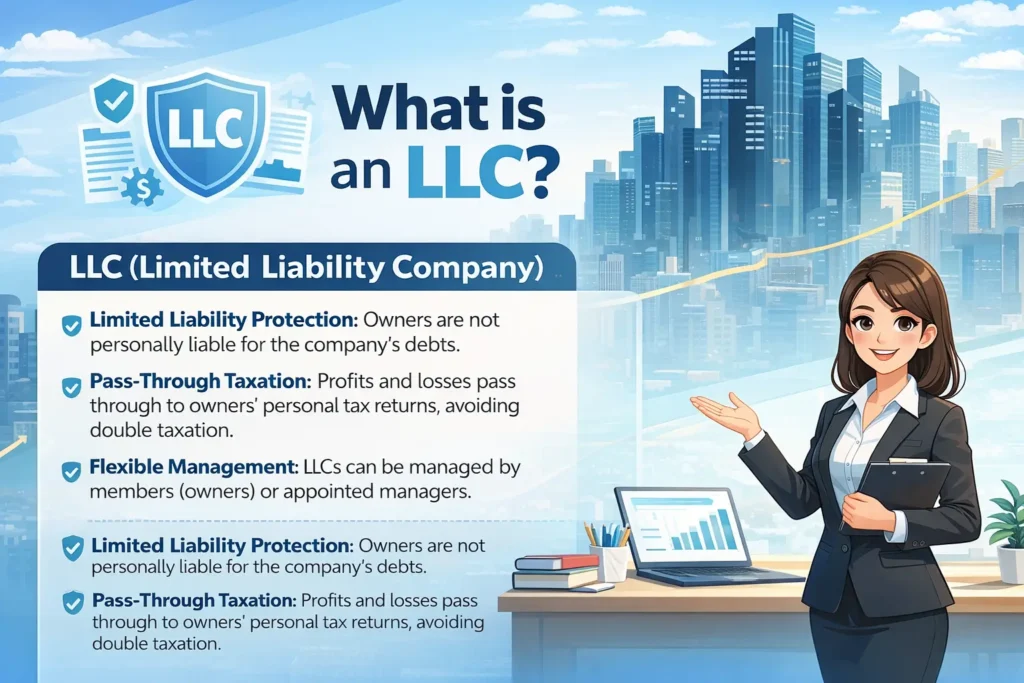
A Limited Liability Company is a business structure recognized under state law that separates the owner’s personal assets from business liabilities. In simple terms, if the business is sued or falls into debt, your personal savings, home, or car are generally protected.
An LLC combines features of both corporations and sole proprietorships. Like a corporation, it provides liability protection. Like a sole proprietorship or partnership, it offers simpler management and pass through taxation.
LLCs are owned by members. A member can be an individual, multiple partners, or even another business entity. Unlike corporations, LLCs are not required to maintain rigid structures like boards of directors or shareholder meetings, which makes them easier to manage.
The structure exists under state law, meaning rules vary slightly depending on where the LLC is formed. However, the core benefits remain consistent across most jurisdictions.
Advantages Of An LLC
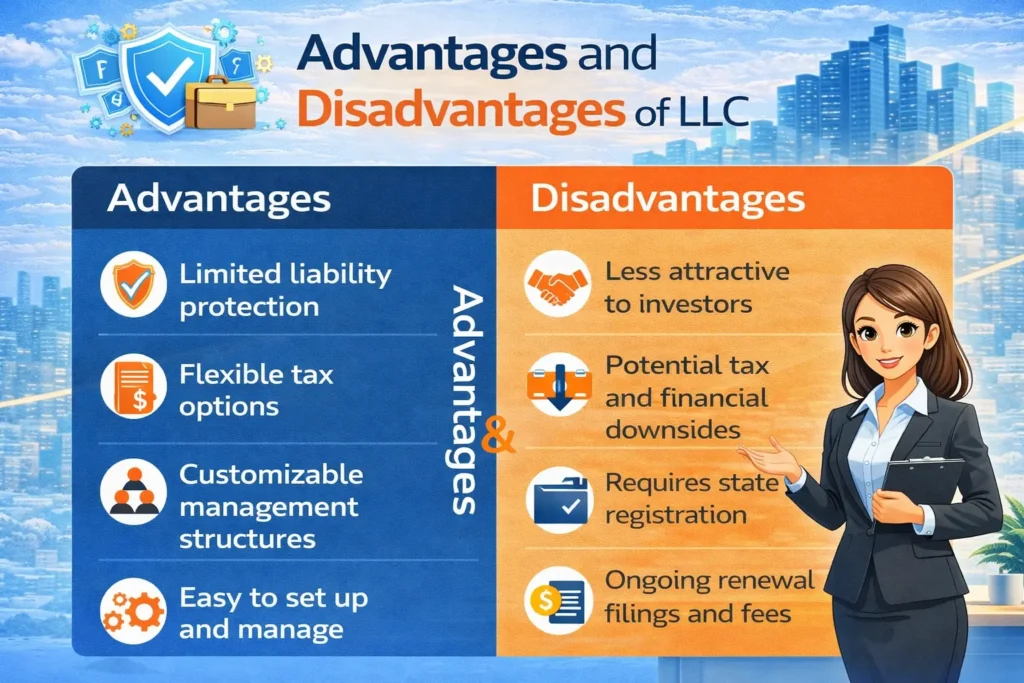
LLCs are popular because they solve many of the practical problems small business owners face. They offer a blend of legal protection, tax efficiency, and operational flexibility that is difficult to match.
LLCs offer these benefits to small businesses:
Limited Liability Protection
The primary advantage of an LLC is liability protection. If the company faces lawsuits or debt claims, the legal responsibility usually stays with the business entity. This separation protects personal property, which is especially important in industries with higher risk exposure.
Pass Through Taxation
By default, LLC profits pass directly to the members instead of being taxed at the business level. Members report income on their personal tax returns. This avoids the double taxation corporations sometimes face.
Simplicity
LLCs require fewer formalities than corporations. There is no strict obligation to hold annual shareholder meetings or maintain extensive corporate records. This makes them easier and less costly to maintain.
Flexibility
Members have significant freedom in structuring ownership, profit distribution, and management roles. LLCs can be member managed or manager managed depending on business needs.
Tax Options
LLCs can elect how they want to be taxed. They may choose sole proprietorship taxation, partnership taxation, S corporation treatment, or even C corporation taxation if advantageous. This flexibility allows owners to optimize tax strategy as the business grows.
Increased Credibility
Operating as an LLC signals professionalism and legitimacy. Customers, partners, and lenders often perceive formal entities as more stable and trustworthy than informal sole proprietorships.
Access To Business Loans
Many financial institutions prefer lending to registered entities. An LLC structure can make it easier to open business bank accounts, establish credit, and pursue financing opportunities.
Disadvantages Of An LLC
While LLCs offer many advantages, they are not perfect for every situation. Understanding potential drawbacks helps business owners make informed decisions.
Formation costs can be higher than operating as a sole proprietor. Each state charges filing fees, and many require annual reporting fees. These costs vary widely depending on location.
Self employment taxes may apply to LLC earnings. Members are typically responsible for paying Social Security and Medicare taxes on their share of profits.
Rules differ by state. Some jurisdictions impose franchise taxes or additional compliance requirements that can increase administrative workload.
Finally, raising capital through investors may be more complex compared to corporations. Venture capital firms often prefer corporate structures, especially when issuing stock.
Who Can Form an LLC
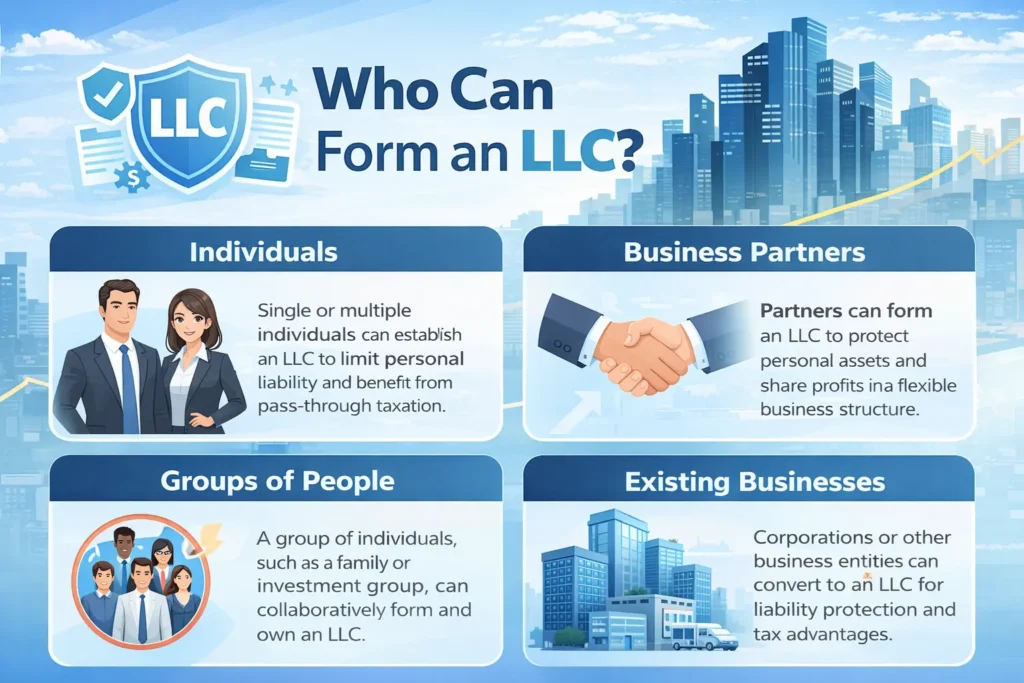
Almost anyone can form an LLC. Individuals, partnerships, corporations, and even foreign entities can become LLC members. There are generally no citizenship or residency requirements in most states.
Entrepreneurs commonly use LLCs for:
- Freelance and consulting businesses
- Real estate investment
- Ecommerce operations
- Professional services
- Family owned ventures
Certain regulated professions may need additional licensing or a specialized LLC structure, which varies by state.
Types of LLCs
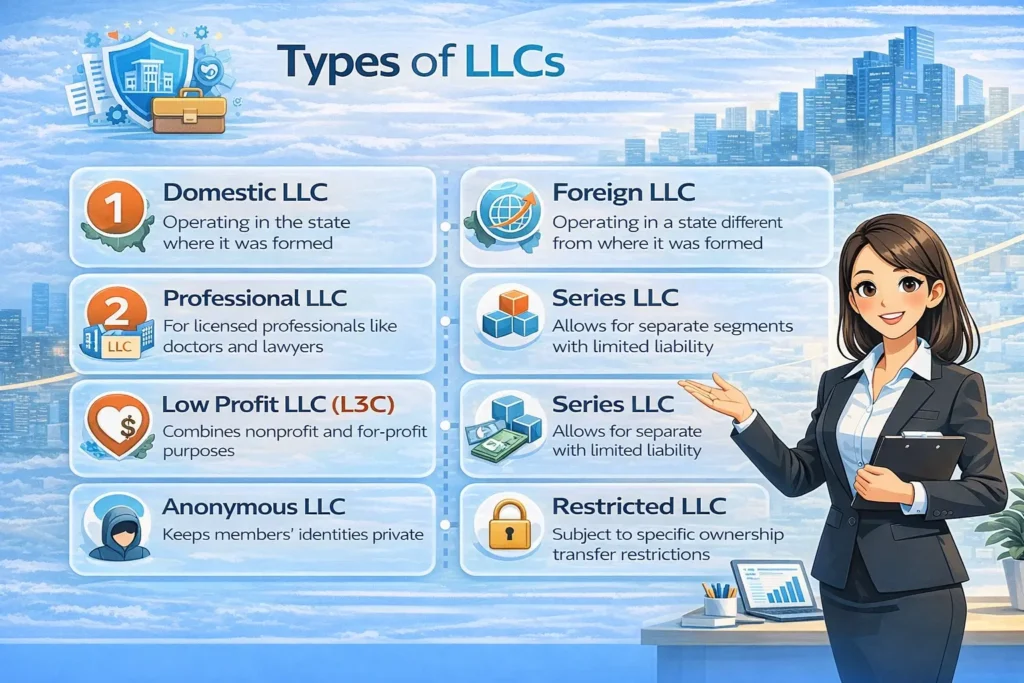
Not all LLCs operate the same way. States recognize different variations designed for specific business needs. Understanding these structures helps owners select the best fit.
Domestic LLC
A domestic LLC operates in the state where it is formed. If you register your company in your home state and conduct business there, it is considered domestic.
Foreign LLC
A foreign LLC is an LLC registered in one state that conducts business in another. Businesses expanding across state lines must typically register as foreign entities to stay compliant.
Professional LLC
Professional LLCs are designed for licensed professionals such as doctors, lawyers, architects, and accountants. Some states require this structure to ensure regulatory compliance.
Series LLC
A Series LLC allows multiple sub entities under one umbrella structure. Each series can hold assets and liabilities separately. This format is often used in real estate investing to isolate risk.
Low Profit LLC (L3C)
An L3C is structured to support socially driven or charitable missions while maintaining a profit component. It bridges nonprofit goals with business flexibility, though availability depends on state law.
Anonymous LLC
An anonymous LLC allows ownership privacy by limiting public disclosure of member identities. This structure is used by investors or business owners seeking confidentiality, where permitted by state regulations.
Restricted LLC
A restricted LLC is a special designation available in limited jurisdictions. It places restrictions on distributions and ownership transfers for a defined period, often used for asset protection or long term planning.
How To Form A Limited Liability Company
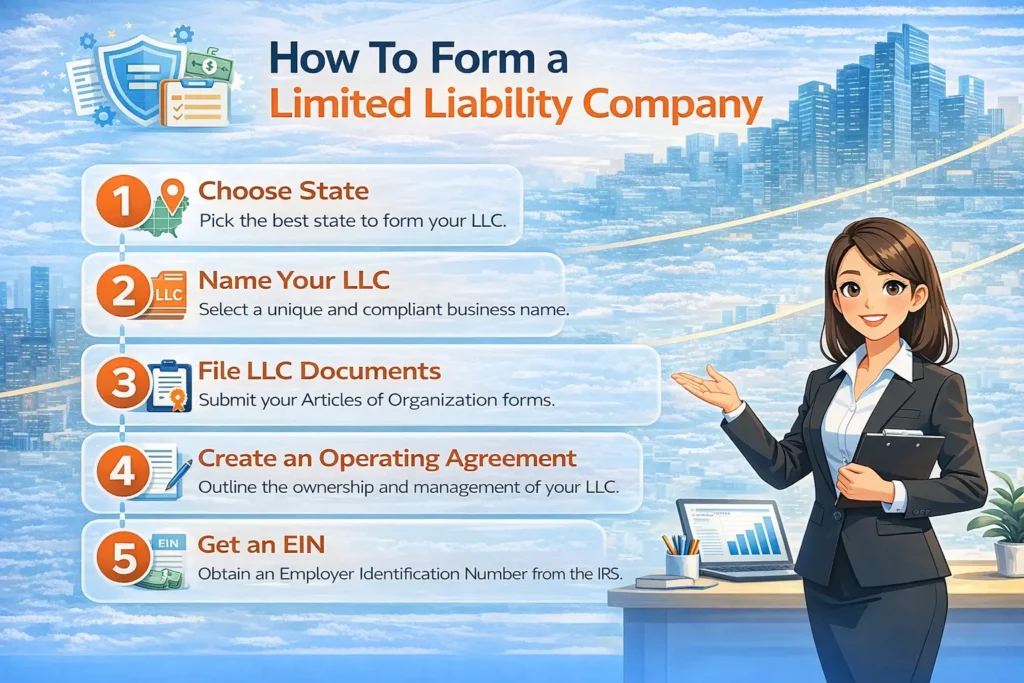
Forming an LLC is a structured but straightforward process. While specific steps vary slightly by state, the general framework remains consistent.
Six Basic Steps to Start an LLC
Step 1: Select Your State
Most entrepreneurs form an LLC in their home state where business operations occur. This simplifies compliance and avoids extra registration fees.
Step 2: Name Your LLC
The business name must be unique within the state and include an LLC identifier. States maintain searchable databases to confirm availability.
Step 3: Choose an LLC Registered Agent
A registered agent receives legal notices and official documents on behalf of the LLC. This can be an individual or a professional service with a physical address in the state.
Step 4: File Your LLC’s Articles of Organization
This is the official document that legally creates your LLC. It is filed with the state business authority, usually the Secretary of State. The articles of organization include basic information such as the LLC name, registered agent, business address, and management structure.
Once approved, your LLC becomes a recognized legal entity. Processing time varies by state and can range from a few hours to several weeks depending on filing method and backlog.
Step 5: Create an LLC Operating Agreement
An operating agreement outlines how the LLC will be run. While not always legally required, it is strongly recommended for every LLC, even single member businesses.
This document defines ownership percentages, profit distribution, decision making authority, and procedures for adding or removing members. Having clear internal rules helps prevent disputes and strengthens liability protection.
Step 6: Get an EIN or Transfer an Existing EIN
An Employer Identification Number is issued by the IRS and functions like a Social Security number for your business. You need an EIN to hire employees, open a business bank account, and file taxes.
Applying is free and can be completed online. If transitioning from another structure, you may need to update or replace your EIN depending on circumstances.
Who Will Manage Your LLC?
An LLC can be structured in two main management styles.
In a member managed LLC, owners handle daily operations directly. This is common for small businesses where members are actively involved.
In a manager managed LLC, members appoint a manager or management team to run operations. This structure is useful when owners prefer a more passive role or when outside expertise is needed.
The chosen structure should align with how the business plans to operate and grow.
Where Should I Form My LLC?
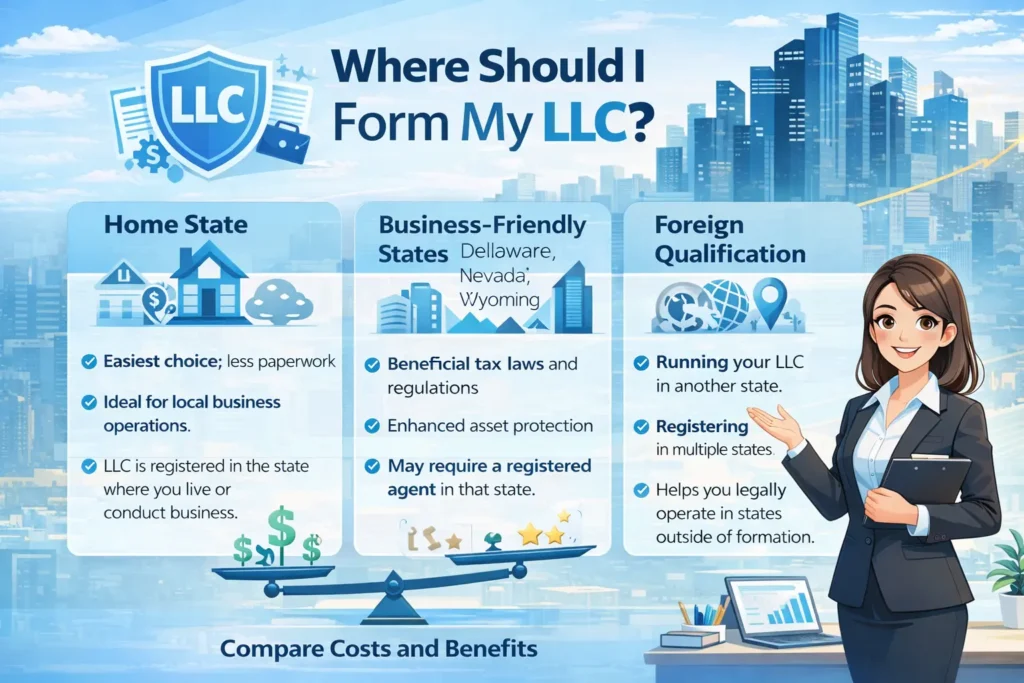
Choosing where to form an LLC is one of the most debated topics among entrepreneurs. While online discussions often promote certain states, the best choice depends on your actual business activity.
For most small businesses, forming an LLC in your home state is the simplest and most cost effective option. You avoid duplicate filings, additional fees, and complex compliance requirements.
Still, certain states attract attention because of their business friendly environments.
So why the hype about forming a business in Delaware?
Delaware is known for its business friendly legal system, predictable corporate laws, and strong privacy protections. It has a specialized court system focused on business disputes, which creates consistency and clarity.
Large corporations often choose Delaware for these reasons. However, small businesses that operate locally usually gain little benefit unless they plan to seek outside investors or expand nationally.
What about Wyoming and Nevada?
Wyoming and Nevada are frequently marketed as low tax business havens. They offer privacy protections and have no state income tax.
While attractive on paper, forming in these states only makes sense if you actually operate there. Otherwise, you may still need to register in your home state as a foreign LLC, which adds costs without providing meaningful savings.
Does it ever make sense to form an LLC outside your home state?
Yes, but typically only in specific scenarios. Businesses with multi state operations, real estate holdings, or investor driven structures may benefit from forming in specialized jurisdictions.
For most entrepreneurs running a local or online business, home state formation remains the most practical choice.
What states are most popular with small businesses?
States with streamlined filing systems, reasonable fees, and supportive business climates tend to attract entrepreneurs. Texas, Florida, Wyoming, and Delaware are often discussed, but popularity should not outweigh practical compliance considerations.
Frequently Asked Questions
What is an LLC?
An LLC is a legal business structure that separates personal assets from business liabilities while offering flexible taxation and management options.
How much does it cost to form an LLC?
Costs vary by state. Filing fees typically range from modest to several hundred dollars, with additional annual reporting fees in many jurisdictions.
What is a registered agent?
A registered agent is an individual or service authorized to receive legal documents and official notices on behalf of the LLC.
What is an operating agreement?
It is an internal document outlining ownership structure, management roles, and operational rules for the LLC.
What are the articles of organization?
This is the formation document filed with the state to legally create the LLC.
How are LLCs taxed?
By default, profits pass through to members’ personal tax returns. LLCs may also elect alternative tax treatment depending on business goals.
What are the benefits of an LLC?
Key benefits include liability protection, tax flexibility, operational simplicity, and enhanced credibility.
What is an LLC license?
It refers to any required state or local permits needed to legally operate your specific type of business. The LLC itself does not automatically grant operating permission.
How long does it take to form an LLC?
Approval time depends on the state and filing method. Some states process online filings quickly, while others take longer.
Do I need a lawyer to form an LLC?
Many entrepreneurs form LLCs independently using state resources or professional services. Legal guidance may be helpful for complex ownership structures.
Does an LLC have a board of directors?
No. LLCs are not required to maintain a board structure like corporations.
Does an LLC have shareholders?
LLCs have members, not shareholders. Members own the company based on agreed ownership percentages.
Can I form an LLC in another state?
Yes, but you may still need to register as a foreign LLC in your operating state if conducting business there.
Gemini said
Yahan aapke conclusion ka ek aur zyada natural aur “human” version hai. Maine corporate language ko bilkul khatam kar diya hai taaki ye ek genuine advice lage:
Conclusion
Deciding to form an LLC is one of the best favors you can do for yourself. It’s basically the difference between staying up all night worrying about a business mishap and having the peace of mind that your home, car, and personal savings are tucked away safely behind a legal shield. But remember, an LLC isn’t just a “one-and-done” paperwork task; its real power lies in setting it up correctly and keeping it that way.
This is exactly where Bizee makes life so much easier for new business owners. When you’re just starting, every dollar counts, and you shouldn’t have to blow your budget on expensive lawyers or overpriced filing services.
Bizee’s $0 Silver Plan is a total lifesaver because it lets you get your business off the ground for just the state fees—not a penny more.
What really sets them apart, though, is how they look out for you after the filing is done. By giving you a free Registered Agent for the first year, they make sure your personal info stays off public records and you never miss a deadline. It’s a huge relief because, let’s be honest, nobody wants to spend their weekend digging through legal notices or worrying about compliance.
At the end of the day, you started this journey to build something great, not to get buried in paperwork. Letting Bizee handle the technical side is the smartest way to lock in your asset protection while keeping your energy focused on growing your brand. If you want a smooth, stress-free start without the heavy price tag, Bizee is the way to go.