
A Complete Guide to Choosing the Right State for Your Limited Liability Company
Starting a business is one of those things that feels both incredibly exciting and a bit scary at the same time. One of the first big hurdles you’ll face is deciding exactly where to register your LLC. It’s not just a checkbox; the state you choose dictates how much tax you’ll pay, the annual fees you’ll owe, and how much legal protection you actually have.
While many people just stick with their home state, others look toward places like Delaware or Wyoming because they are known for being very “business-friendly.”
But here’s the thing, picking the state is only half the job. You also need a way to actually file the paperwork without getting lost in legal jargon. This is where Bizee (formerly Incfile) really shines. They’ve become the go-to choice for over a million entrepreneurs, mainly because they make the entry barrier almost non-existent.
Their Silver Plan is a game-changer for anyone on a budget—it costs $0 plus state fees. Unlike many other services that charge you just for filling out a form, Bizee handles your Articles of Organization for free. Even better, they include a full year of Registered Agent service for free, which is a huge saving since most companies charge $100–$200 for that alone from day one.
You also get a business tax consultation and a user-friendly dashboard to track everything, making it feel like you have a professional team behind you without the professional price tag.
In this guide, we’re going to break down how to actually choose the best state for your specific goals. We’ll look at the real costs, the legal benefits of different states, and why having a partner like Bizee in your corner can save you a lot of stress (and money) in the long run.
What is an LLC and Why State Choice Matters
A Limited Liability Company or LLC is a business structure that blends the liability protection of a corporation with the tax flexibility of a partnership or sole proprietorship. LLCs protect the personal assets of owners (called members) from business debts and lawsuits.
Every LLC must be registered with a state government. There is no federal LLC registration. Once you select a state, you must follow that state’s rules for:
- LLC formation and annual reporting
- State business taxes
- Registered agent requirements
- Business licensing
Choosing the wrong state can mean higher costs, unexpected taxes and unnecessary paperwork.
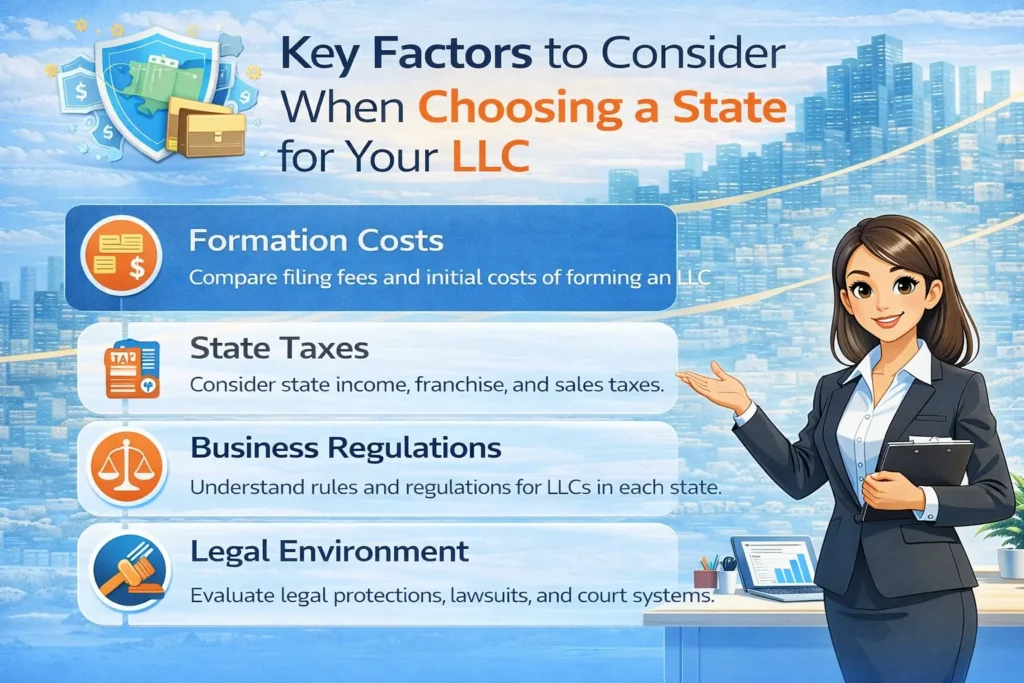
Key Factors to Consider When Choosing a State for Your LLC
When choosing a state for your LLC, the primary consideration is the “home state” rule: for most small business owners, forming the entity where you physically reside and operate is the most cost-effective and legally straightforward path.
If you choose to incorporate in a different state, such as Wyoming or Delaware, to take advantage of their specific laws, you will likely still be required to register as a “foreign LLC” in your home state. This often leads to “double compliance,” where you are forced to pay two sets of filing fees, hire two registered agents, and file annual reports in both jurisdictions,
the tax environment and administrative maintenance of a state are critical factors. While popular hubs like Wyoming, Nevada, and Florida boast no state income tax, it is vital to look at the specific tax structure. For example, Washington and Ohio utilize gross receipts taxes, which can penalize low-margin businesses by taxing total revenue rather than net profit.
Conversely, states like Texas offer generous thresholds—currently around $2.65 million—before any franchise tax is even due, making it a powerhouse for growing mid-sized enterprises. Furthermore, recurring costs should not be ignored; while California carries a hefty $800 minimum annual tax, states like New Mexico have become favorites for budget-conscious founders because they require no annual reports or recurring state fees after the initial setup.effectively negating any initial savings.
Before we look at specific states, here are the core factors that should guide your decision:
1. Your Business Location
If your business operates physically in one state, forming your LLC in that state is usually simpler and cheaper. Otherwise, you may need to register as a foreign LLC in your home state — which adds fees and compliance.
2. Formation and Annual Fees
States charge a fee to form your LLC and then annual fees or franchise taxes. Some states are very expensive, while others remain low cost for years.
3. Taxes
Some states have:
- State income tax
- Gross receipts tax
- Franchise tax
- Sales tax
Understanding what taxes your LLC will owe can be a huge money saver.
4. Legal Protections
Some states have predictable and business-friendly courts and laws that protect member rights and limit disputes.
5. Privacy Laws
Some states allow owners to remain private on public records. This can matter if you want anonymity.
6. Simplicity of Compliance
Some states have fewer annual report requirements and less bureaucracy.
Common Mistakes Entrepreneurs Make
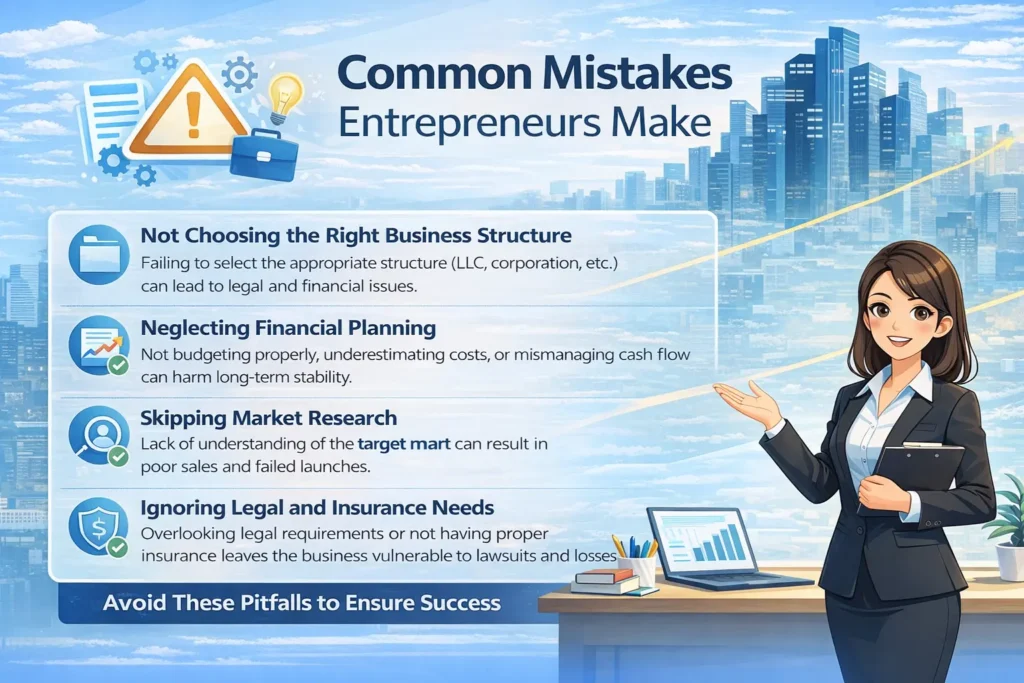
Starting a business is a high-stakes balancing act where even minor oversights can lead to significant setbacks. One of the most pervasive mistakes is skipping market validation; many entrepreneurs build products based on gut feelings or personal passion, only to find there is no actual market demand.
Closely linked to this is ignoring customer feedback. Treating your original idea as “precious” rather than a flexible concept can prevent you from pivoting when early users point out flaws or unmet needs.
Before we compare states, here are mistakes many new founders make:
- Choosing a state based on reputation alone
- Ignoring tax obligations in the state where the business physically operates
- Picking the cheapest option without thinking about long-term growth
- Forgetting to factor in registered agent costs
Now let’s look at the most talked-about states for LLC formation.
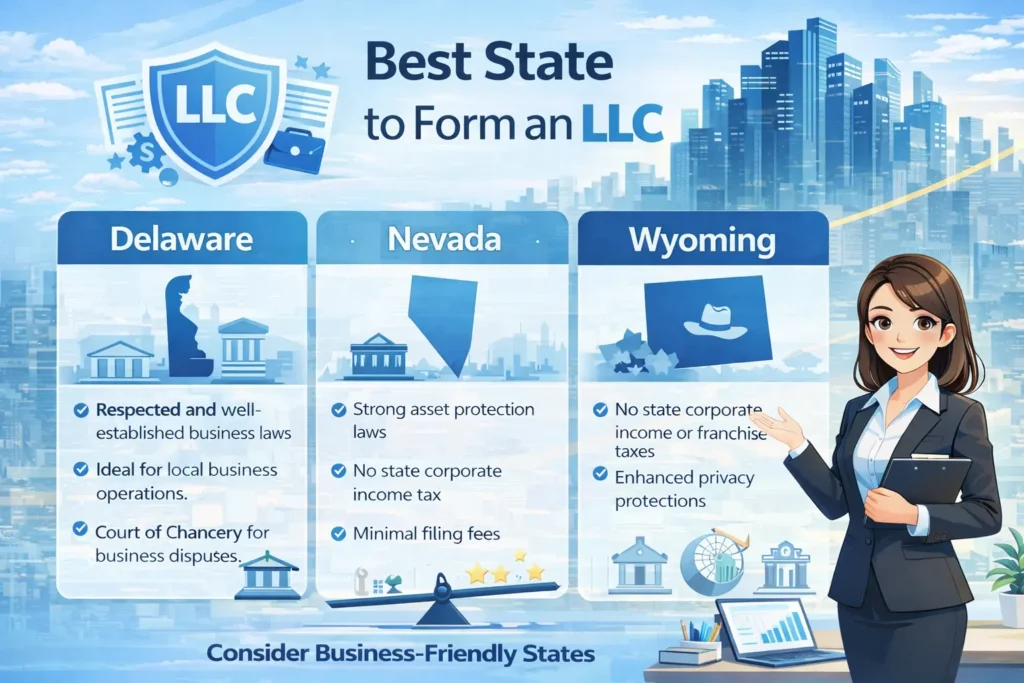
Delaware
Delaware is often the first name that comes up when business owners look for the best place to form an LLC.
Why Delaware is Popular
- Established and sophisticated business laws
- Separate business court (Chancery Court) that specializes in business cases
- Strong asset protection and predictability
- LLC member and manager names do not need to be public
Delaware’s legal system is designed for business disputes and many investors like companies formed there.
Costs in Delaware
- Formation fee
- Annual franchise tax
- Registered agent fee
Even though its fees are higher than some states, many businesses choose Delaware for the legal advantages and investor appeal.
Ideal For
- Startups seeking outside investment
- Companies planning to grow nationally
- Businesses with complex ownership structures
Nevada
Nevada is known for business-friendly laws and low taxes.
Key Benefits
- No state corporate income tax
- No personal income tax
- No franchise tax
- Strong privacy protections — owners not listed publicly
Nevada also has strong protections against personal liability.
Considerations
- Higher initial filing costs compared to some states
- Nevada requires business licenses
- If you operate outside Nevada, you still register in your home state
Ideal For
- Business owners who value privacy
- Companies with high earnings
- Projects not tied to a specific physical location
Wyoming
Wyoming has become a top choice for entrepreneurs thanks to its combination of low cost and privacy.
Strong Points of Wyoming
- No corporate or personal income taxes
- Very low annual fees
- No need to disclose members publicly
- Strong liability protections
Wyoming is often cited as one of the cheapest states to maintain an LLC.
Ideal For
- Small businesses on a budget
- Businesses without physical offices
- Entrepreneurs who want maximum privacy
Your Home State
For most local businesses, forming an LLC in your home state is the smartest choice.
Why It Makes Sense
- No need to register as a foreign LLC
- Only one set of annual fees and reports
- Bank accounts and licenses easier to manage
If your business has a physical location, employees, inventory or customers in your state, registering locally saves money and avoids compliance headaches.
Other States Entrepreneurs Consider
Let’s cover some other states often mentioned:
Texas
- No state income tax
- Large economy
- Somewhat higher filing fees
Texas is attractive for businesses planning to grow regionally.
Florida
- No personal income tax
- Strong tourism and consumer markets
Florida is ideal for consumer-facing businesses and those owning property.
New York
- Strong economy and access to markets
But taxes and compliance costs are higher than many states.
States With Special Tax Structures
When evaluating states with special tax structures, entrepreneurs must distinguish between traditional income taxes and more nuanced models like the Gross Receipts Tax. States such as Washington and Ohio forgo taxing net profits in favor of taxing total revenue, which can be challenging for low-margin businesses that may owe taxes even during unprofitable years.
Washington’s Business & Occupation (B&O) tax varies by industry, while Ohio’s Commercial Activity Tax (CAT) is triggered once a business surpasses a specific revenue threshold. Nevada offers a middle ground with its Commerce Tax, which only impacts high-earning entities with Nevada-source revenue exceeding $4 million, effectively exempting the vast majority of small to mid-sized enterprises.
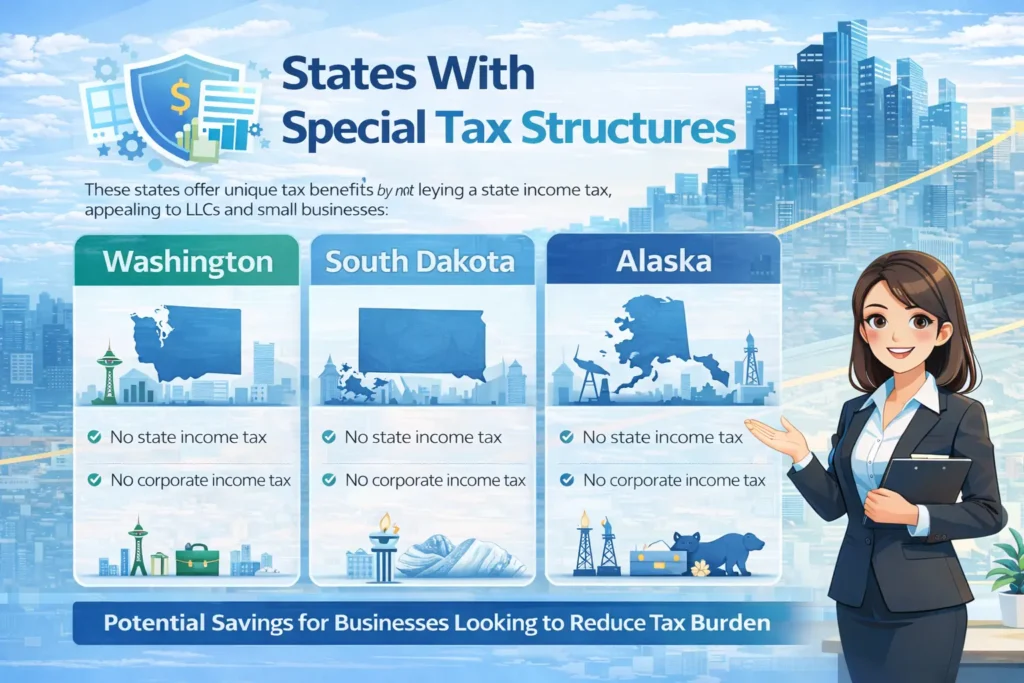
Several states offer unique structures that matter for LLC taxation:
Washington
No personal or corporate income tax but has a business and occupation tax based on gross receipts.
South Dakota
No income tax and low fees.
Alaska
No state sales tax but local taxes may apply.
Understanding how each tax works helps avoid surprises.
Frequently Asked Questions About Choosing a State for Your LLC
Do I Have to Form My LLC in My Home State?
No, but if you do business physically in your home state, you likely need to register there anyway. This means paying double fees.
Can Forming in Another State Save Me Money?
Sometimes, depending on how your business operates and where it earns income. For online businesses, states with no income tax might save money. But compliance and foreign registration costs can offset savings.
What is a Registered Agent?
A registered agent is a person or company that receives legal mail and official notices for your LLC. Every state requires a registered agent with a physical address in the state.
Do States Affect Taxes?
Yes. Some states tax income, others tax gross receipts and many charge franchise taxes or annual fees.
Step By Step Choosing the Best State for Your LLC
Here’s a simple process to make your decision:
- List where your business will operate physically or online
- Compare formation and annual costs
- Review state tax obligations
- Evaluate privacy needs
- Check legal protections
- Consider future investors if you plan to raise capital
Final Comparison Table
| State | Income Tax | Franchise Tax | Privacy | Fees | Best For |
|---|---|---|---|---|---|
| Delaware | Low | Yes | Moderate | Medium | Investors & startups |
| Nevada | None | No | High | High | Privacy focused |
| Wyoming | None | No | High | Very Low | Small businesses & privacy |
| Home State | Varies | Varies | Varies | Lower overall | Local operations |
Conclusion
At the end of the day, determining the “best” state to form your LLC depends entirely on your location, how big you plan to scale, and how much you value your privacy. For the vast majority of small business owners, the most practical answer is almost always their home state. While the idea of “tax-free” states like Wyoming or Nevada sounds great, registering as a foreign LLC in your home state often leads to double fees and extra paperwork that just isn’t worth the hassle.
However, different goals require different strategies:
- For High-Growth Startups: Delaware is still the gold standard if you’re looking for venture capital or planning to go public.
- For Privacy & Low Costs: Wyoming and New Mexico are the best bets for location-independent founders who want to keep their fees low and their data private.
- For No-Tax Markets: Texas and Florida are perfect for those who want a massive local market without paying state income tax.
Whatever state you decide on, the key is to make sure the filing process is handled correctly from day one.
This is why we highly recommend Bizee as your formation partner. Not only do they make the process incredibly simple, but their $0 Silver Plan also ensures you aren’t overpaying for basic services. When you combine their free filing with a full year of free Registered Agent service, Bizee isn’t just the most affordable option—it’s the smartest one for long-term growth.
Choosing a state is a big strategic move, but it shouldn’t be a stressful one. By pairing a well-thought-out location with a reliable partner like Bizee, you can stop worrying about compliance and focus on what actually matters: building your business.