
Some states feel expensive before your business even gets started. Montana is not usually one of them. That is part of the appeal.
If you are building a small business, launching a service, starting an online store, or turning freelance work into something official, Montana gives you a relatively clean path to formation without a huge filing bill.
But low cost does not mean no structure.
If you want your business to look professional, protect your personal assets, and stay organized as it grows, forming an LLC is one of the smartest first steps you can take.
Montana LLCs are formed through the Secretary of State. The current filing fee for Articles of Organization is $35, and annual reports are generally due by April 15 each year.
The standard annual report fee is listed as $20 if filed before April 15 and $35 after April 15, although the Secretary of State has also publicly highlighted fee waivers in recent years, so it is worth checking the filing portal at the time you file.
The good part is that the process is manageable. You do not need to be a lawyer to understand it.
You just need to know the order of the steps and make a few smart decisions early.
In this guide, you will learn how to start an LLC in Montana, what it costs, which documents matter, what mistakes to avoid, and what you need to do after formation to keep your company in good standing.
What Is An LLC?
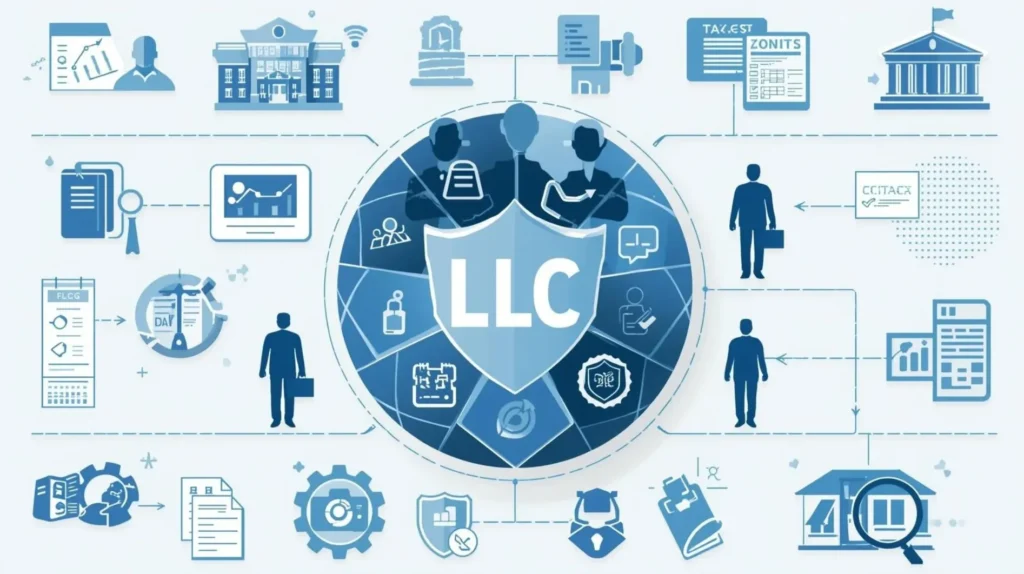
An LLC, or Limited Liability Company, is a legal business structure that separates your business from you as an individual.
That separation matters because it can help protect your personal assets if your business faces debt, lawsuits, or financial trouble.
Instead of the business being legally tied directly to you, the company becomes its own entity.
For many business owners, that is a big deal.
An LLC is also popular because it gives you a balance between protection and simplicity. It is more formal than running everything under your own name, but usually much easier to manage than a corporation.
Many people choose an LLC because it offers:
- Personal liability protection
- Flexible tax treatment
- Simpler internal management
- Fewer formalities than corporations
- Better credibility with customers, vendors, and banks
That is why LLCs are common for consultants, freelancers, local service businesses, online sellers, agencies, and small teams that want a professional structure without a lot of complexity.
How To Start An LLC In Montana?
If you want to form an LLC in Montana, the process is fairly straightforward. The key is to move through the steps carefully instead of rushing through them just because the filing fee is low.
Here is the full process.
Step 1: Choose A Name For Your Montana LLC

The first step is choosing a name for your business.
Your Montana LLC name must be distinguishable from other business names already on file with the state. It also needs to include an LLC designator such as:
- LLC
- L.L.C.
- Limited Liability Company
This sounds easy, but your name is more important than many people realize. It is not just something for the filing.
It becomes part of your brand. It shows up on your website, invoices, contracts, email address, and bank account.
A strong business name should be:
- Easy to remember
- Easy to spell
- Professional sounding
- Flexible for future growth
- Suitable for a domain name
A lot of owners rush this step because they want to get the filing done. That can be a mistake. A name might be legally available but still be weak from a branding perspective.
Try to think bigger than the filing itself. Ask whether the name still works if your business expands, adds services, or grows into a broader brand.
If you are not ready to form the LLC yet, Montana also offers name reservation, and the current fee is $10.
Step 2: Appoint A Registered Agent
Every Montana LLC must have a registered agent.
A registered agent is the person or business responsible for receiving legal notices and official state correspondence on behalf of the company.
This is a required part of your setup because the state needs a reliable contact tied to the LLC.
Your registered agent can usually be:
- A Montana resident who qualifies
- A business entity authorized to serve as a registered agent in Montana
Some owners choose to be their own registered agent. That can save money, but it comes with trade-offs.
If you use your own address, you may be giving up privacy. You also need to be dependable about receiving official notices.
That is why many business owners use a professional registered agent service instead. It can make the business setup cleaner and reduce the risk of missing something important.
Montana also allows statement of change filings for registered office or agent, and those are listed with no fee on the Secretary of State fee page.
Step 3: File The Articles Of Organization

This is the step that officially creates your Montana LLC.
In Montana, a domestic LLC is formed by filing Articles of Organization with the Secretary of State.
Montana’s official filing fee page lists the filing fee at $35, and the state’s business portal handles online filing and annual report functions.
This filing generally includes:
- LLC name
- Business address
- Registered agent information
- Organizer information
This is not a hard step, but it is still worth doing carefully. A typo in the company name, a wrong address, or incomplete registered agent details can create problems later.
Take a few extra minutes to review everything before you submit it. A clean filing now saves you time later.
Once the state accepts the Articles of Organization, your Montana LLC officially exists.
Step 4: Decide How The LLC Will Be Managed
Before you move on, think about how the company will actually run.
If you are the only owner, this is usually simple. You will manage the business yourself.
If there are multiple owners, this step becomes much more important. You should be clear about:
- Who owns what percentage
- Who can make decisions
- Who handles daily operations
- Who can sign contracts
- How profits will be shared
Many business disputes are really structure problems that were ignored too early. It is much easier to define these things now than to argue about them later when the business is active and money is involved.
Even if everyone gets along today, clarity still matters.
Step 5: Create An Operating Agreement

An operating agreement is one of the most useful internal documents your LLC can have.
Montana does not require you to file it with the state, but that does not make it unimportant. This document explains how the LLC works internally.
A strong operating agreement can include:
- Ownership structure
- Member roles and duties
- Voting rights
- Profit sharing
- Rules for adding new members
- Rules for removing members
- Exit plans if someone leaves
- How disputes will be handled
For multi-member LLCs, this document is especially important because it creates clear expectations from the beginning.
Even for a single-member LLC, it helps reinforce that the business is a separate legal entity.
A lot of owners skip this step because no one asks for it during filing. That is usually a mistake.
Step 6: Get An EIN
After your LLC is formed, one of the next important steps is getting an EIN.
An EIN, or Employer Identification Number, is your business tax ID. You usually need it to:
- Open a business bank account
- File taxes
- Hire employees
- Work with some vendors or payment platforms
Even if you are a one-person business, getting an EIN is a smart move. It helps separate your business identity from your personal one and makes the company feel more official.
Step 7: Open A Business Bank Account

Opening a business bank account is one of the most important things you can do after forming the LLC.
This helps keep your personal and business finances separate, which matters for legal protection, tax preparation, and bookkeeping.
A business bank account helps you:
- Accept payments professionally
- Pay business expenses clearly
- Keep financial records organized
- Simplify accounting
- Reinforce the separation between you and the company
One of the biggest mistakes new business owners make is mixing business money with personal money. That creates confusion quickly and can make the LLC feel less like a separate business.
If you want your company to operate like a real business, this step should happen early.
Step 8: Handle Taxes And Any Required Licenses
Your LLC filing creates the legal company, but it does not automatically give you every approval you may need to operate.
Depending on what your business does, you may also need:
- State tax registration
- Sales tax setup
- Local licenses
- Professional licenses
- Industry permits
This depends on your business model. A consultant, an online store, and a contractor may all need different things.
That is why it is important to think beyond the LLC filing itself. The LLC creates the legal entity. Other registrations may still be needed depending on your activity.
Step 9: File The Montana Annual Report

Montana requires LLCs to file an annual report.
The standard deadline is April 15. The fee page lists annual reports at $20 before April 15 and $35 after April 15.
Montana has also publicly announced annual report fee waivers in some recent years, including messaging on its official site and annual deadline reminders, so it is worth checking the online filing portal when your report is due to confirm the current year’s fee.
If a business stays delinquent long enough, the Secretary of State has warned that involuntary dissolution can follow.
This is one of the easiest things to forget because it happens after the excitement of formation is over.
But staying current matters. A calendar reminder can save you from late fees and compliance issues later.
Benefits Of Starting An LLC In Montana
1. Personal Liability Protection
One of the biggest advantages of an LLC is that it helps separate your personal finances from your business obligations.
If the company runs into legal or financial problems, your personal assets are usually in a much better position than they would be without a formal entity.
2. Affordable State Filing Costs
Montana is attractive because the state filing fees are relatively manageable compared with many other states.
That makes it easier for first-time founders to get started without a large upfront cost.
3. Professional Business Image
An LLC often makes your business look more established. Clients, suppliers, and even banks tend to take a registered company more seriously than an informal business arrangement.
4. Flexible Structure
An LLC can work well for a one-person business, a husband-and-wife operation, or a company with multiple partners. It gives you room to grow without forcing you into a more complicated structure too early.
5. Simple Ongoing Maintenance
Montana still requires annual reports, but the overall compliance burden is not especially heavy if you stay organized and file on time.
How Much Does It Cost To Start An LLC In Montana?
Here is a simple cost breakdown:
| Expense | Cost |
|---|---|
| Articles of Organization filing fee | $35 |
| Name reservation, optional | $10 |
| Registered agent service | $100 to $300 per year |
| Operating agreement | $0 to $200 |
| EIN | $0 |
| Business licenses and permits | $50 to $400+ |
| Annual report before April 15 | $20 |
| Annual report after April 15 | $35 |
| Reinstatement | $35 plus delinquent annual report fees |
Montana’s official fee schedule supports the $35 Articles of Organization fee, $10 optional name reservation, annual report fees based on timing, and reinstatement fees tied to delinquent reports.
That makes Montana a relatively practical state for small business owners who want to form an LLC without a high upfront filing cost.
Common Mistakes To Avoid When Starting An LLC In Montana
Choosing A Weak Name
A name might be legally available and still be a poor long-term choice. Make sure it works for branding and future growth.
Skipping The Operating Agreement
Even though it is not filed with the state, it still gives your business internal structure and can prevent confusion later.
Mixing Personal And Business Finances
This creates bookkeeping problems and weakens the separation between you and your company.
Forgetting The Annual Report
Montana requires annual reports, and late filing costs more than on-time filing. Missing it entirely can lead to bigger compliance problems.
Using A Weak Registered Agent Setup
Your registered agent is part of the legal foundation of the LLC. This is not something to handle casually.
Ignoring Other Registrations
Forming the LLC does not automatically mean you are fully ready to operate. Depending on your business, you may still need licenses, tax registration, or other approvals.
Is A Montana LLC Right For You?
A Montana LLC can be a strong choice if you want a structure that is affordable, practical, and fairly simple to maintain.
It may be a good fit if you are:
- Starting a small business
- Running a local service company
- Selling online
- Working as a freelancer or consultant
- Operating alone or with a small team
For many owners, Montana offers a good balance between low startup costs and simple ongoing compliance, as long as you stay organized with annual reports.
Conclusion
Starting an LLC in Montana is one of the more practical ways to make your business official without drowning in state fees or complicated filings.
You choose a name, appoint a registered agent, file the Articles of Organization, decide how the company will be managed, create an operating agreement, get an EIN, open a business bank account, take care of taxes and licenses, and stay current with your annual reports.
That is what turns a business idea into a real business structure.
An LLC is not just a document filed with the state. It is a foundation that helps protect you, organize your operations, and support growth.
If you are serious about building something in Montana, forming an LLC can be a smart and very practical next step.